How to read a fabric: weight, weave, and how it will actually hang
What weight, weave, and hand tell you about how a fabric will hang once it is made up, and what a memo sample will never show you.
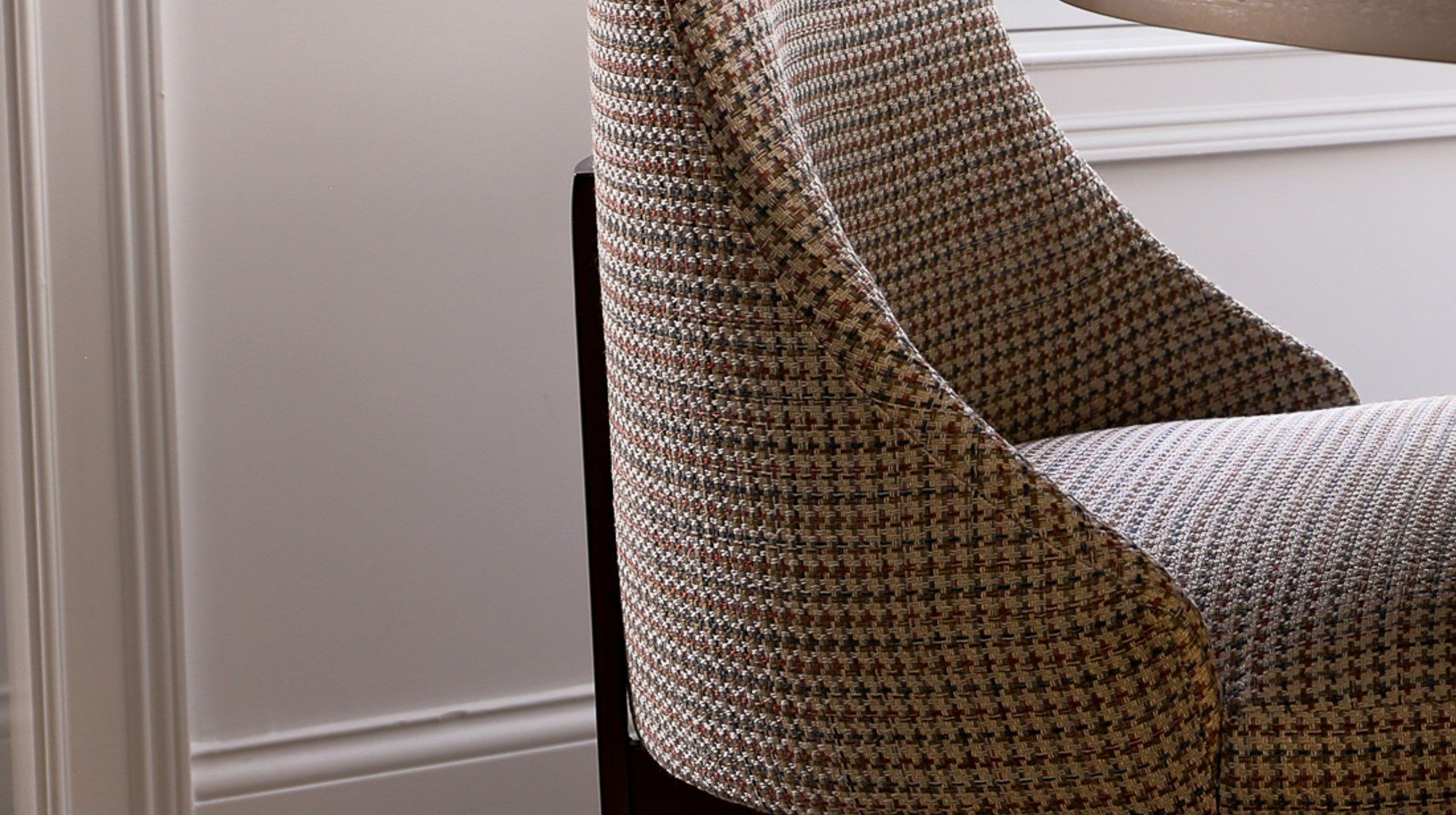
Nearly everyone chooses fabric the same way. You find a color you love, hold the sample at arm’s length, and decide. Color is the one thing a sample tells you honestly. Almost everything else about how that fabric will behave once it is cut, sewn, and hung is invisible in a four-inch square.
Here is what Amy looks at instead.
Weight tells you what it will do, not how good it is
Weight is measured in ounces per yard, and heavier is not better. It is only different. A heavy fabric holds a fold and stays where you put it. A light fabric moves, catches light, and will not hold a pleat on its own.
Which one is right depends on what your window has to do. A dining room you only use in the evening can carry weight. A breakfast room that lives on morning light usually should not.
The mistake she sees most is a light fabric chosen for a tall window because it looked airy on a table. At nine feet it reads limp. It does not drape, it hangs.
Weave decides what the light does
Hold the sample up to a window before you do anything else. Watch how much light comes through and what happens to the color when it does.
A tight weave blocks light and keeps its color. An open weave glows, and the color shifts, sometimes a lot. Linen with a loose, irregular weave will read three shades lighter with the sun behind it than it did lying on the table.
Weave also predicts trouble. A loose weave in a sunny south-facing room will relax and grow over a season. A slubby, nubbly weave is beautiful in the hand and can fight a crisp pleat. Silk is glorious and will fade in direct sun, which is a lining decision rather than a reason to avoid it.
Hand predicts the fold
Hand is how a fabric feels and how it moves when you gather it. It is the closest thing to a preview of the finished treatment, and it takes two seconds.
Take a good handful and squeeze it, then let go. Does it fall back open, or stay crushed? Does it want to fold in soft rolls or sharp creases? Does it spring back like upholstery or collapse like a sheet?
A fabric that resists being gathered will resist being pleated. A fabric that wrinkles in your fist will wrinkle across a chair seat.
A pattern gathered is a different pattern
This is the one that surprises people most. A large pattern that reads beautifully flat can disappear entirely once it is pleated, because two-thirds of it ends up inside the folds. A stripe that looked bold flat becomes a thin, busy line. A big open floral becomes texture.
So the question is never whether you like this pattern. It is whether you like the part of it that will still be showing.
Where the pattern has to survive intact, the treatment changes to suit it: a flat roman shade, a flat panel, a valance, an upholstered seat. That decision gets made at the same time as the fabric, not afterwards.
Almost anything can be made to behave
Interlining adds body and weight and makes a lighter fabric hang like a heavier one. Blackout belongs in bedrooms. A sun-facing room needs protection from fade regardless of what the face fabric is.
Which means the honest answer to “will this fabric work” is usually “it depends what goes behind it.”
What the sample cannot tell you
A memo sample cannot tell you how a fabric looks after a season of being drawn every evening, how a seam sits once the pattern has to match across two panels, or whether the hem will hang level on a floor that is not level.
That part comes from having made the thing before. Amy chooses fabric standing in the room it is going into, at the hour the light matters most, and she chooses it for how it will behave at length, not for how it photographs in the hand.
If you are working out fabric for a specific window, that is what custom drapery is for. The fabric, the lining, the pleat, and the hardware all get decided together, by the person who will be sewing it. The same reading applies to upholstery, where hand and durability matter more than drape, and the wrong weight shows up in six months rather than on installation day.