What actually makes a window treatment look expensive
Fullness, length, stack, lining, and how a panel is dressed on installation day. The details that separate finished work from covered windows.
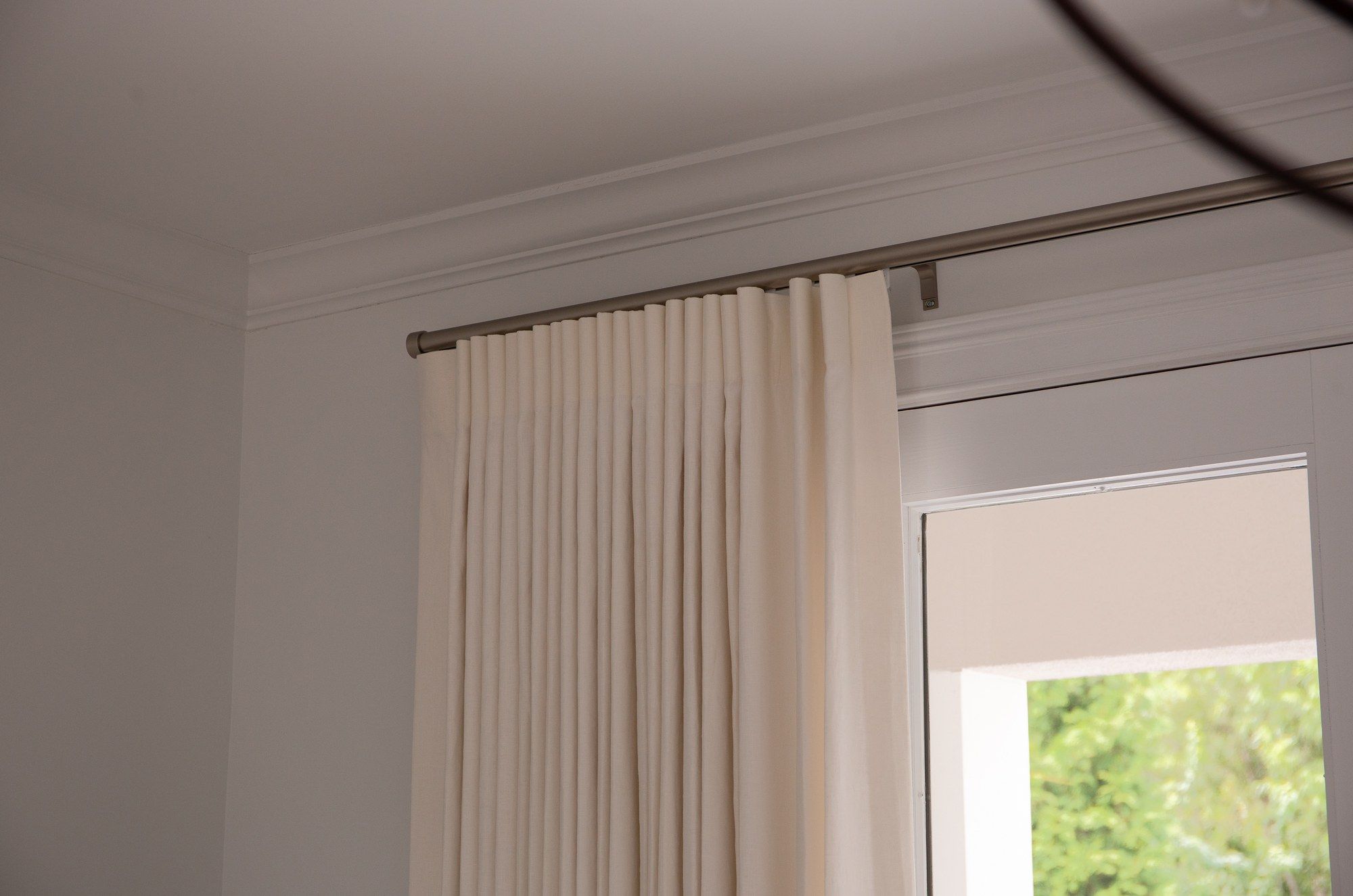
You can walk into a room and know immediately. Nothing about it announces itself, and yet the windows read as finished rather than covered. It is almost never the fabric. It is five or six decisions, all made before anything was cut, and none of them fixable afterwards.
Fullness, before anything else
Fullness is how much fabric is in the panel compared to the width it covers. It is the biggest tell, and it is the first thing cut when a treatment is being made down to a number.
A panel at two and a half times the width of its opening falls in deep, full columns. The same panel at one and a half times looks stretched, and no fabric is good enough to hide it. You can see it from across a room without knowing what you are looking at. The folds are shallow, the spacing is wide, and the whole thing reads thin.
There is no trick that substitutes for fullness. It is the yardage.
Length, and the inch that matters
Drapery either reaches the floor or it does not, and there is very little middle ground that looks deliberate. A panel that stops an inch above the floor looks like it shrank. A panel that just kisses the floor, or puddles a little, looks like it was made for the room.
The same discipline applies at the top. Hanging the rod at the window frame makes your ceiling look lower. Hanging it high, close to the ceiling, and letting the panel run the full height makes the window look taller than it is. It is the simplest change available and almost nobody makes it.
Where the panels go when they are open
Stack-back is how much wall the panels take up when they are pulled open, and it decides whether the treatment feels generous or feels in the way. A rod that stops at the frame means the open panels sit on the glass, blocking light and view for no reason. Extending the rod past the frame on both sides gives them somewhere to go.
That has to be decided before the hardware is ordered, because bracket projection and return determine how the finished treatment sits against the wall. A rod chosen for looks alone will bow under interlined panels, and a bowed rod is visible forever.
Lining is what you are actually seeing
From the street, all anyone sees is the lining, which is a good reason not to treat it as an afterthought. From inside, the lining is what gives the face fabric its body.
Interlining is the layer most people have never heard of, and it is what makes expensive drapery feel expensive. It adds weight between the face fabric and the lining, so the panel hangs in soft, heavy folds and holds them. It is the difference between fabric that drapes and fabric that hangs.
The details at the edges
Trim is where a treatment stops looking bought and starts looking made. A contrast band down a leading edge. A banded border on a roman shade that picks up something else in the room. A return that closes tight against the frame so no light sneaks around the side.
Then there is the work that is nearly impossible to photograph and obvious the second you walk in. The hem hangs level. The pattern matches across two panels and across every seam. The pleats are spaced evenly, and the spacing is the same on both sides of the window. Nothing draws attention, which is the whole point.
It gets dressed on installation day
Here is the part that gets skipped most often. A brand-new panel does not know how to fold. Straight out of the workroom it hangs however it was packed, with the creases in the wrong places, and it will keep those creases for months if nobody trains it.
Dressing means going through every fold by hand on installation day, setting each one, and tying the panel loosely so it learns the fold. It takes a while, and it is the difference between drapery that looks right on day one and drapery that looks right eventually, if at all.
Amy installs what she makes, which means the person who decided how the panels should fall is the one standing there setting them.
If you want to see how these decisions get made in a specific room, that is what custom drapery covers. Fabric, lining, pleat, hardware, and the dressing, all decided together. For pillows and cushions, the same principle applies at a smaller scale. Fill, seam, and welt do exactly what fullness and lining do on a window.