Drapery, shades, or blinds: how to decide room by room
A room-by-room way to choose between drapery, shades, and blinds, starting from what the window actually has to do rather than from the product.
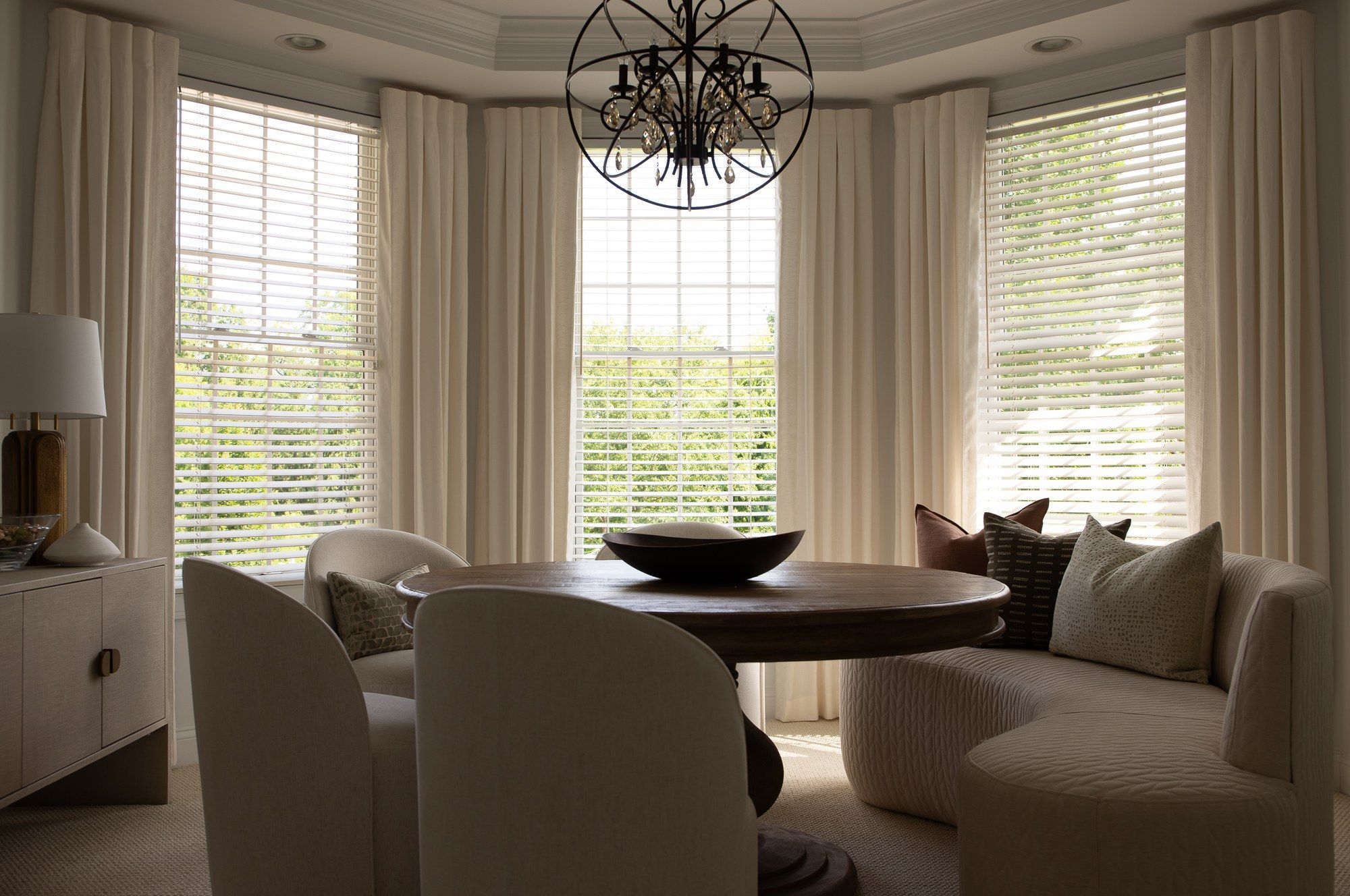
Most people come to this question backwards. They decide they want roman shades, then work out which windows get them. Turn it around, because drapery, shades, and blinds are not three styles of the same thing. They solve different problems, and your room will tell you which problem you have.
Ask what the window has to do
Four questions, in this order.
What is wrong with the room right now, the light, the privacy, the temperature, or the way it looks? What hour of the day does it bother you? Will anyone actually operate this every day, or does it need to be set once and left? And is the window itself worth showing, or is it something to cover up?
The answers usually narrow it to one option before any fabric comes out.
Living rooms want both, in layers
A living room gets used across a whole day of moving light, which is the hardest brief of the four. It is also the room where the treatment does the most visual work.
The usual answer is layered. A shade or blind handles the light and the glare. Drapery at the sides handles the architecture. The shade does the work. The drapery makes the window look finished and the ceiling look higher, and much of the time it never closes at all.
If you only do one, do the drapery, and accept that you will squint at the television for one hour in the afternoon. If glare is genuinely the problem, do the shade first and add drapery later. That order works. The reverse is harder.
Bedrooms are a darkness problem
Bedrooms are the one room with a right answer. You want it dark, and you want the light leaking around the edges dealt with.
Blackout lining handles the middle of the window. What it does not handle is the gap at the sides, and that is where nearly all the light in a supposedly dark bedroom is coming from. A return that closes tight against the frame, or a shade mounted inside the opening under the drapery, is what actually makes a room dark.
Street-facing bedrooms have a second requirement that gets confused with the first. Privacy and darkness are not the same thing. A top-down bottom-up shade covers the lower half of the window and leaves the daylight above it, which is usually exactly what you want during the day.
Kitchens and baths: whatever wipes clean
Fabric near a stove or a shower is a maintenance decision more than a design one. Moisture, grease, and steam are unkind to anything you have to take down to clean.
A blind or a woven wood shade is usually the honest answer here, and a short valance can add softness without putting yards of fabric next to a cooktop. If the window is over a sink, whatever goes on it has to be reachable with wet hands.
Windows nobody can reach
Tall windows, wide spans, anything above a stair or stranded behind furniture. Choose these for whether they will ever be adjusted, because most of the time they are not. A treatment that stays in one position forever might as well have been specified for that position.
Motorization solves it, and it is far easier to decide before drywall than after. It also lets a whole room drop on a schedule, ahead of the afternoon sun rather than after the room has cooked.
When the window itself is the point
Some windows should not be covered. A leaded-glass panel, a good arch, a bay with a view worth having. The treatment should frame those, not hide them. Drapery held at the sides, or a shade that stacks up almost invisibly at the top, keeps the architecture and still gives you a way to shut the room down when you want to.
The opposite is also true. A window that is off-center, oddly proportioned, or too small for its wall can be corrected. Rod width, mount height, and where the panels stack are what do the correcting, and those get decided in the room with a tape measure.
Where each one comes from
One practical difference worth knowing. Blinds and shades are manufactured products, specified and ordered to the measurements of your opening, including roman shades, which come from the manufacturer built to spec rather than out of Amy’s workroom. Drapery is made by hand for your window, which is why the fabric range is wide open and the details are all yours to decide.
That is why a room usually ends up with both, and why the two decisions are best made at the same time. The shade and the drapery have to agree about where the light is going.